|
|
 |
Crowsnest
Highway: The East Kootenays
In the
rugged East Kootenays, Hwy 3 is the link to three great backcountry
and hiking sites that hold their own in any claim-to-fame competition.
Elk Lakes Provincial
Park is about 30 miles (50 km) north of Elkford
and borders the south side of Alberta's Kananaskis Park, nestled above
the tree line in the Front Range of the Rocky Mountains. The scenery
is breathtaking - there's just something about lakes set against massive
cliff faces, headwalls, waterfalls, craggy summits, and hanging icefalls
that makes you stop in your tracks and say a profound 'wow.' You'll
need to stop, anyway, to rest - most of the hikes in Elk Lake justify
the adjectives 'strenuous,' 'demanding,' and 'very demanding.'
The one exception is the 0.5-mile (0.8-km) walk from the parking lot
to Lower Elk Lake. Muscle-taxing hiking trails lead from the
park entrance to Elk Pass, along the shoreline of Upper
Elk Lake, and to Petain Creek Falls, and mountain climbing
is also quite challenging here. Horseback riders will enjoy this park
- there are extensive, well-established, and durable trails. However,
winter recreation is somewhat curtailed here, due to the park's remote
location and unfavourable weather conditions. There are three areas
of wilderness camping, located at the park entrance, at Lower
Elk Lake, and at Petain Creek. To reach the park, take Hwy 43 north
of Sparwood for 22 miles (35 km) to the town of Elkford. From Elkford,
travel well-marked gravel roads on west side of the Elk River for
about 27 miles (44 km) to where the road crosses the river and joins
the Kananaskis Power Line Road. It's 26 miles (43 km) from this crossing
to the park.
British Columbia's Akamina-Kishinena
Provincial Recreation Area, together with Waterton Lakes National
Park in Alberta and Glacier National Park in Montana, form the 'Crown
of the Continent,' a combination of biological, geological, and climatic
factors that occurs nowhere else in North America. And if that weren't
enough, these parks are home to one of the densest grizzly bear populations
in North America and the only specimens of Wyoming (Yellowstone) moose
in Canada. Add unique geological features and the highest peaks in
the Clark Range of the Rockies - Starvation and King Edward, clocking
in at 9,301 feet (2837 m) and 9,186 feet (2802 m), respectively -
and you have a royal park system indeed.
It's likely that up to half of all the rare and endangered plant species
in British Columbia occur in Akamina-Kishinena. To protect this delicate
ecosystem, no motorized transportation is allowed in the park. Backcountry
campsites are available, and the area is good for horseback riding
and some fishing. Exercise caution: There really are many very big
bears around here. Akamina-Kishinena Provincial Recreation Area is
located in the extreme southeastern corner of the province, close
to the Alberta and US borders. The only road to the park in Canada
is gravel, south from Hwy 3 at Morrissey Provincial Park, or from
the town of Michel south to Kishinena Creek Logging Road. There's
also trail access over Akamina Pass from the roadhead at Cameron Lake
in Waterton Lakes National Park, Alberta.
Height of the Rockies
Wilderness Area is a new, undeveloped site. One of its key characteristics
is its variation of elevation - from 4,265 to 11,315 feet (1310 to
3474 m). It's a great place for hiking and horseback riding but, like
the two wilderness parks mentioned, should be attempted by experienced
hikers and mountaineers only. The 167,960-acre (68000-hectare) wilderness
area is located in the Rocky Mountains and stretches northwest along
the Continental Divide between the Elk Lakes Provincial Park in southeastern
British Columbia, and Banff National Park and Peter Lougheed Provincial
Park in southwestern Alberta.
Columbia River Valley
Great hiking is available in Kootenay
National Park. Two trails in particular are worth mentioning:
Floe Lake/Hawke Creek (6 miles/10 km) leads west to a glacier-fed
lake; Stanley Glacier Trail is a short, strenuous, 3-mile (5-km)
hike that leads to a hanging valley and glacier.
There are many rewarding and beautiful hikes on the recreation trails
throughout the Revelstoke,
Golden, and Invermere
Forest Districts. For a detailed map of trails and recreation sites
in these areas, call the local BC Forest Service office, toll free
(800) 665-1511.
Top of the
World Provincial Park receives top marks as an alpine region of
sublime beauty. Mount Morro (elevation 9,553 feet/2914 m) is the highest
peak in the park. Many archaeological sites are located here, in what
was once the traditional home of the Upper Kootenay First Nation.
Forest cover is mostly spruce, pine, and some fir, and most of the
plateau is carpeted with alpine flowers. Small populations of large
mammals inhabit the park, and an abundance of birds live around Fish
Lake. This lake is noted for its cutthroat trout and dolly varden
fishery, but you must have a valid British Columbia fishing licence
and a copy of the park's fishing regulations before casting a line.
There are backcountry campsites available and rustic cabins. You'll
find the access road to Top of the World Park on Hwy 93/95, just past
Skookumchuk. Follow Sheep Creek Road. It's very rough and not recommended
for low-clearance vehicles. Alternatively, turn east off Hwy 93/95
about 3 miles (4.5 km) south of Canal Flats and travel southeast for
about 32 miles (52 km) on the Whiteswan Forest Road. Both routes are
well marked.
Purcell Wilderness
Provincial Conservancy is in a class of its own. Earl Grey, then
Governor-General of Canada, crossed the Purcell Mountains from Invermere
in the Columbia Valley to Argenta on Kootenay Lake. His route followed
a trail up Toby Creek and down Hamill Creek over a 7,401-foot (2257
m) pass. This route, later named the Earl Grey Pass Trail,
had already been well defined by the Shuswap Indians. Despite Grey's
urging to set aside this magnificently scenic area as a park, not
much was done until the 1970s, when the area was designated as a 'roadless
tract' in which the natural environment would remain undisturbed by
any development. Consequently, there's no road access, and all forms
of mechanized access are prohibited, including helicopters. Over 85
miles (137 km) of hiking trails, challenging mountaineering, horse
riding, and winter recreation await backpackers in the five biogeoclimactic
zones spread throughout this central portion of the Purcell Mountains.
Use the western trailhead at Argenta on the northeast shore of Kootenay
Lake, or Toby Creek Trail from Invermere on the east.
Bugaboo Glacier Provincial
Park and Alpine Recreation Area is a first-class mountaineering
region; its challenging peaks in the northern extremity of the Purcell
Mountain Range have attracted climbers from around the world since
the late 1880s. Particularly, the North Howser 'Tower' and the South
Ridge of Bugaboo Spire are considered very difficult. It's certainly
breathtaking, but you shouldn't attempt to hike or climb this region
unless you're experienced, well-equipped, and in good physical condition.
The Bugaboos lie 28 miles (45 km) west of Hwy 95 at Brisco. There's
good gravel road access, but the roads are used by logging trucks,
so check with BC Parks regarding road use and condition before embarking.
Another park requiring experience and self-sufficiency, but offering
many heavenly rewards, is Mount
Assiniboine Provincial Park, located 30 miles (48 km) south of
Banff and about 30 miles (50 km) northeast of Radium
Hot Springs on the British Columbia - Alberta border. To get into
the park you have to take one of four major hiking-access trails.
Two of these originate in British Columbia. Most hikers take the Lake
Magog Trail (strenuous; 12 miles/20 km return) from Hwy 93 in
Kootenay National Park. The trailhead is located at the junction of
the Simpson and Vermilion Rivers. An infrequently used route to Lake
Magog leads about 9 miles (14 km) east from Hwy 93 along Settlers
Road in Kootenay National Park, then connects with the Cross River
Forest Road for another 15 miles (24.5 km) as it follows the Cross
and Mitchell Rivers. Be particularly careful of mining trucks
along the Mitchell River portion.
From the trailhead beside an ore-mining operation the 18.5-mile (30-km)
trail leads along the Mitchell River to Wedgewood Lake, and then Lake
Magog. Visitors are strongly advised to pick up a park brochure and
the National Topographic Series (NTS) map #82J/13 before going into
the park. Once you're in the park, there are a number of trails to
choose from, ranging in difficulty from easy to strenuous. There are
also several undeveloped routes that lead to some of the most scenic
areas in the park; ask a ranger for advice. Wilderness campgrounds,
four alpine cabin shelters, a group-camping area plus other backcountry
tent sites, climbing shelters, and ranger stations are available.
Spillimacheen River
This region offers a rugged wilderness hiking experience and
kilometres of backroads that lead to alpine trails and spectacular
mountain vistas. Top hiking trips include the moderate 5.5 km trail
Silent Pass trail to McMurdo Cabin and Silent Lake on Silent
Mountain (2,621m/8,600ft), reached via Spillimacheen FS Road and McMurdo
Creek FS Roads (55 km) from Parson.
This is a great day hike or 2 to 3-day backpack. The Columbia Valley
Hut Society requires reservations for overnight use of McMurdo Cabin
- contact the Invermere Forest Service. A day hike is possible from
Silent Lake southeast to the lower reaches of the Spillimacheen Glacier.
Spillimacheen FS Road also provides access to the steep Caribou
Creek Trail and the lakes and alpine tarns in this fabulous
alpine area. At the end of the logging road turn south on the Caribou
Creek road - a 4x4 vehicle is required for the last 6-km stretch.
From the Caribou Creek alpine tarns, experienced backpackers can
continue toward Glacier National Park for great views of Beaver
Creek Valley and the many glaciers visible across the valley: Duncan,
Beaver, Grand and Deville Neve Glaciers.
South of Parson is the 16-km (8-hour) Warren Creek Trail,
a hike along an old mining road and unmarked routes along Warren
Creek to the alpine, and hikes on Bugaboo Creek. Northwest
of Parson are hiking trails that lead from the Spillimacheen Valley
northwards to Bald Mountain and the eastern boundary of Glacier
National Park.
|
| |
 |
 |
Nipika Mountain Resort, Invermere |
Listing Details |
|
Simply Spectacular, Spectacularly Simple! Enjoy Canada's most beautiful wilderness in luxury timber-frame or log cabins in the heart of the B.C. Rocky Mountains, beside Kootenay National Park - the perfect spot to get away from it all. Come hiking, biking, rafting, canoeing, cross-country skiing and snowshoeing, or just sit back on the porch and do nothing. Life is Short - Play Hard. |
| |
 |
Range Helicopters, Drayton Valley |
Listing Details |
|
Range Helicopters provides an array of industrial, commercial and recreational heli services. Customized recreational helicopter adventures include hiking, biking, skiing, snowboarding, golfing, fishing, sightseeing, or special events such as weddings. We'll provide the local knowledge and specialized, experienced personnel to make your adventure a safe and memorable experience. |
| |
 |
The Cabins at Whitetail, Canal Flats |
Listing Details |
|
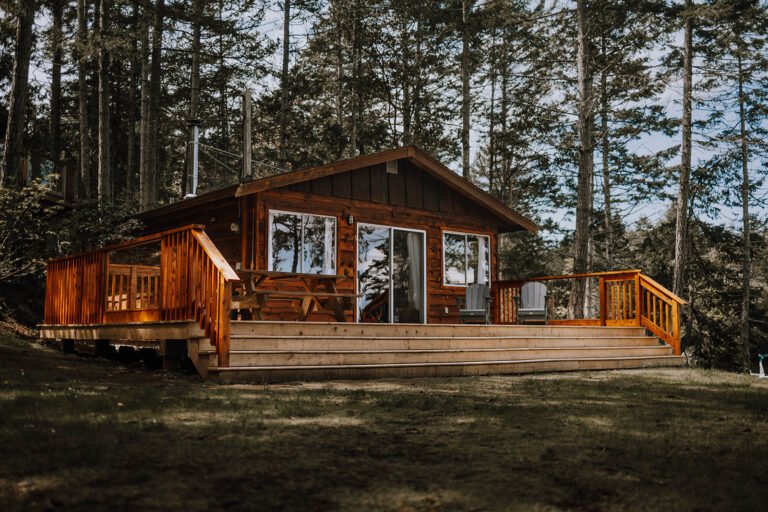
Enjoy cabins designed for today's outdoor enthusiast who likes to enjoy the splendour and tranquility of the Purcell Mountains but at the end of the day wants modern conveniences. Our well appointed cabins offer a rustic decor with full kitchen, bathroom amenities and BBQ. Each unit has a sleeping capacity of six. Walk out your cabin door and enjoy all the outdoor activities the mountains offer: Fishing, swimming, canoeing, hiking, snowmobiling, cross country skiing and more. |
| |
|
|